
Oversættelse
Rediger oversættelse
ved 

Bestil tilpasset rustfrit stål impeller af Investment Casting med snævre tolerancer, glatte flydeoverflader, og skalerbar produktion til pumper og turbiner.
In the realm of fluid dynamics and mechanical engineering, the performance and durability of a component often determine the success of the entire system. Blandt disse kritiske komponenter, the impeller stands out as a vital element influencing efficiency, flow rates, and overall operational stability.
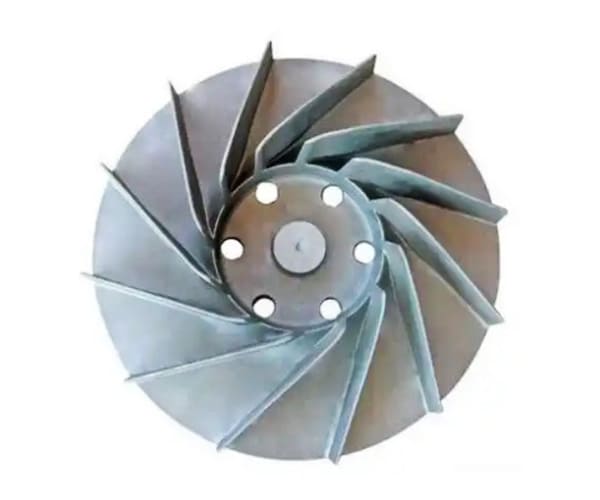
When precision, holdbarhed, and custom specifications are required, Brugerdefineret rustfrit stål impeller af Investment Casting emerges as the optimal solution. This process offers unmatched craftsmanship, enabling manufacturers and engineers to produce high-performance impellers tailored to specific applications.
I denne artikel, we explore the intricacies of designing and manufacturing custom stainless steel impellers through investment casting, emphasizing how this process elevates engineering standards and boosts operational efficiency.
Impellers are crucial rotating components used in pumps, Turbiner, kompressorer, and other fluid machinery.
Their primary function is to transfer energy to fluids, creating the necessary pressure or flow.
The design and material of an impeller directly impact the efficiency, lang levetid, and safety of the entire system.
Choosing the right material and manufacturing process is vital. Rustfrit stål, kendt for sin korrosionsbestandighed og styrke, is often preferred, especially when coupled with precision manufacturing techniques like investment casting.
Standard impellers serve many applications, but custom solutions are often necessary to meet specific performance criteria or operate within unique environmental conditions.
Custom stainless steel impellers offer several advantages:
Investing in custom manufacturing ensures that impellers meet exact operational parameters, leading to improved system reliability and maintenance efficiency.
Investeringsstøbning, Også kendt som tabt-wax casting, is a precise and versatile manufacturing process ideal for producing complex metal components like impellers.
When applied to stainless steel, it offers high dimensional accuracy, fremragende overfladefinish, and superior mechanical properties.
Because stainless steel grades exhibit excellent casting characteristics, investment casting can effectively produce high-stress, corrosion-resistant impellers customizable to application-specific needs.
Choosing the appropriate stainless steel grade is paramount for performance and longevity. Commonly used grades include:
| Stålkvalitet | Egenskaber | Typiske applikationer | Korrosionsbestandighed | Mekanisk styrke |
|---|---|---|---|---|
| 304 | Austenitisk, god korrosionsbestandighed | General water and chemical applications | Fremragende | Moderat |
| 316 | Austenitisk, molybdenum addition | Marine miljøer, ætsende kemikalier | Overlegen | Moderat |
| 17-4 PH | Martensitisk, nedbør-hærdning | High-strength applications | God | Meget høj |
| Duplex rustfrit stål | Balanced austenitic-ferritic | Ekstremt korrosive miljøer | Fremragende | Høj |
The selection depends on factors such as operating temperature, corrosive media, tryk, and mechanical load.
Designing impellers for specific applications involves balancing performance parameters such as hydraulic efficiency, strukturel integritet, og produktionsevne.
Modern design incorporates CAD software and computational fluid dynamics (CFD) to optimize geometry before manufacturing.
This iterative process reduces prototype costs and accelerates development cycles.
In high-performance applications, quality assurance is non-negotiable.
| Fordel | Beskrivelse | Industry Impact |
|---|---|---|
| Precision Fit | Exact dimensions tailored to equipment | Reduces assembly time and costs |
| Komplekse geometrier | Support for innovative designs | Enhances efficiency and flow characteristics |
| Material Optimization | Use of high-grade stainless steel | Improves corrosion resistance and lifespan |
| Hurtig prototype | Short lead times for custom orders | Accelerates project timelines |
| Omkostningseffektivitet | Reduced waste and machining | Lowers manufacturing costs |
DeZE Technology Co., Ltd, a leader in casting manufacturing, recently produced a series of custom stainless steel impellers for a wastewater treatment plant.
The client required impellers with complex blade angles to optimize aeration and pump efficiency under corrosive conditions.
This successful implementation underscores how investment casting and custom design elevate overall system performance.
| Metode | Kompleksitet | Tolerance | Overfladefinish | Ledetid | Koste | Materialekompatibilitet |
|---|---|---|---|---|---|---|
| Investeringsstøbning | Meget høj | ± 0,1 mm | Meget glat | Moderat | Konkurrencedygtig | Fremragende |
| Fo_Accurate Machining | Moderat | ± 0,05 mm | Fremragende | Længere | Højere | God |
| Centrifugalstøbning | Moderat | ±0.3 mm | Surface rough | Kort | Sænke | God |
| Fabrication/Welding | Begrænset | Variabel | Variabel | Hurtig | Variabel | Begrænset |
Investment casting offers the best combination of complexity, præcision, and material versatility for custom stainless steel impellers.
The demand for high-performance, rustfri, and precisely engineered impellers continues to grow across multiple industries. Brugerdefineret rustfrit stål impeller af Investment Casting provides an unmatched combination of design flexibility, Mekanisk integritet, and surface quality necessary for demanding applications.
Leveraging expertise from companies like DEZE Technology Co., Ltd, manufacturers can deliver highly tailored solutions that meet and exceed industry standards.
Investing in advanced manufacturing techniques like investment casting ensures that impellers not only perform reliably but also support sustainable, effektiv, and innovative fluid systems.
Efterhånden som industrier udvikler sig, the importance of precision engineering and custom solutions will only deepen, reaffirming investment casting’s vital role in producing next-generation impellers.
Investment casting delivers high dimensional accuracy, komplekse geometrier, Fremragende overfladefinish, materialeeffektivitet, and the ability to produce highly customized impellers suitable for various challenging environments.
The choice depends on your application’s specific requirements, herunder korrosionsbestandighed, driftstemperatur, tryk, and mechanical stress. Karakterer som 316 offer superior corrosion resistance in marine environments, hvorimod 17-4 PH provides high strength.
Absolut. Investment casting is particularly suited for complex geometries and intricate blade patterns, enabling high-performance designs that are difficult to achieve with traditional manufacturing methods.
DEZE Technology adheres to international standards such as ISO 9001 and conducts rigorous inspections, herunder ikke-destruktiv testning, CMM, and surface analysis, to guarantee consistent quality.
Major beneficiaries include water treatment, olie og gas, kemisk forarbejdning, elproduktion, VVS, og marine industrier, where corrosion resistance and component longevity are critical.
Del med PDF: Download


Copyright © 2024 DENNE Technology Co., Ltd. Alle rettigheder forbeholdes.
Efterlad et svar