


High-quality AISI 316 stainless steel casting pump bottom, offering superior corrosion resistance, durability, and reliable performance in industrial pumping applications.
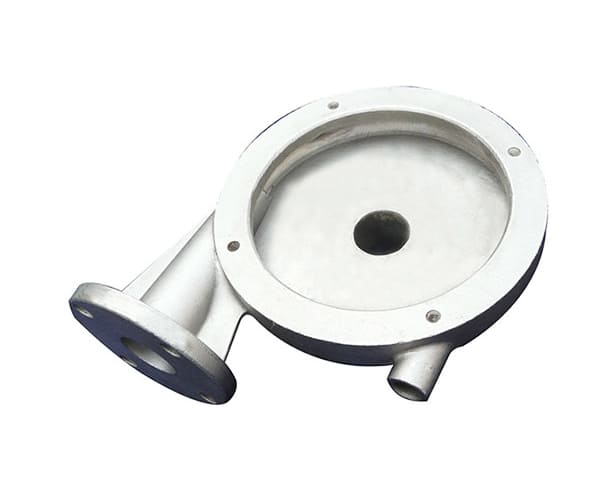
| Name | AISI 316 Stainless Steel Casting Pump Bottom |
| Material | AISI 316 Stainless Steel |
| Technology | Investment Casting, Sand Casting, Die Casting, CNC machining |
| Size | Customize |
| Payment Currency | USD, EUR, RMB |
AISI 316 stainless steel casting pump bottoms sit at the heart of many fluid handling systems, where reliability, corrosion resistance, and precise geometry determine efficiency and uptime.
The term “AISI 316 Stainless Steel Casting Pump Bottom” encompasses a family of complex cast components shaped to seal, channel, and support pump housings, impellers, seals, and mechanical seals in a range of aggressive media—from seawater to chlorides, acids, and hot oils.
In practice, the pump bottom is more than a cradle for other parts; it defines alignment, flow characteristics, thermal stability, and long-term service life.
This article provides a comprehensive, data-driven guide to AISI 316 stainless steel casting pump bottoms, addressing material properties, design considerations, manufacturing processes, finishing options, quality control, performance data, and practical guidance for engineers, procurement teams, and maintenance personnel.
We also introduce DEZE Technology Co., Ltd, a supplier with an established track record in producing high-integrity pump components and offering technical support to industries ranging from chemical processing to marine engineering.
DEZE Technology Co., Ltd is a supplier and manufacturer that specializes in advanced stainless steel components for pump systems, including AISI 316 stainless steel casting pump bottoms.
With a focus on engineering-grade alloys, precision casting, and rigorous quality control, DEZE combines in-house metallurgical expertise, modern foundry capabilities, and a global quality assurance framework to deliver components that meet challenging customer specifications and industry standards.
Key strengths of DEZE include:
– In-house sand and investment casting capabilities for 316 and related alloys.
– Advanced finishing, passing through stages such as mechanical polishing, passivation, electropolishing, and coating options.
– Dimensional accuracy, strict tolerances, and traceability for critical pump bottoms.
– Comprehensive QA programs aligned with ISO 9001, CE, and other industry standards.
– Engineering support for design optimization, fatigue analysis, corrosion assessment, and lifecycle cost modeling.
For buyers evaluating the supply chain, DEZE offers a combination of technical depth, reliable lead times, and a customer-centric approach that emphasizes value, performance, and serviceability of AISI 316 stainless steel casting pump bottoms.
AISI 316 stainless steel is an austenitic alloy known for its excellent corrosion resistance in chlorides and marine environments, good high-temperature strength, and ductility.
The primary alloying elements are chromium, nickel, and molybdenum, with molybdenum (typically 2–3%) enhancing pitting resistance and overall corrosion protection.
316L is a low-carbon variant designed to reduce sensitization during welding, while 316Ti and other stabilized variants add titanium or other elements to improve high-temperature performance.
Key properties (typical values at room temperature, unless noted):
– Chemical makeup: Fe-based alloy with ~16–18% Cr, 10–14% Ni, 2–3% Mo; carbon content typically ≤0.08% for 316, ≤0.03% for 316L.
– Density: approximately 7.9–8.0 g/cm³.
– Yield strength: ~290–420 MPa (annealed), higher with work hardening.
– Ultimate tensile strength: ~550–700 MPa (annealed), higher after aging or work hardening.
– Elongation: ~40% in 2 inches for annealed 316.
– Corrosion resistance: excellent in most oxidizing and mildly reducing environments; outstanding resistance to chlorides and marine atmospheres.
– Toughness: good at low temperatures; robust impact strength.
– Weldability: excellent, particularly with 316L; welding requires control of heat input and post-weld treatment to avoid sensitization.
For pump bottoms, the combination of corrosion resistance and structural integrity under fluid pressure, temperature, and vibration makes AISI 316 a preferred material.
The presence of molybdenum significantly improves resistance to chloride-induced corrosion, which is critical in seawater and many chemical service streams.
The cast version provides economical manufacturing for complex geometries, where thick sections, internal channels, bolt patterns, and mounting flanges are common.
Pumps handling seawater, brines, chlorinated solvents, acids in dilute form, or oxidizing agents benefit from the corrosion resistance of 316 stainless steel.
In many pump bottom configurations, the exposed surfaces and internal channels contact aggressive fluids.
316’s molybdenum-rich structure helps resist pitting and crevice corrosion, extending service life in challenging environments where 304 would deteriorate more quickly.
AISI 316 maintains good toughness at sub-zero and ambient temperatures, with adequate yield and ultimate tensile strength for typical pump housings and frames.
When cast, 316 alloys can provide a robust structure that tolerates thermal cycling, vibration, and transient loading in pumping applications.
Casting enables the production of complex features, internal channels, integrated bosses, and bolt patterns that would be difficult or cost-prohibitive with wrought forms.
For pump bottoms that require exact fit, stable thermal expansion behavior, and consistent wall thickness, investment casting or sand casting of 316 stainless steel delivers predictable results with acceptable tolerances.
316L is often used when welding or heat-affected zone (HAZ) concerns are significant, due to its lower carbon content reducing sensitization.
Other variants, such as 316Ti, add stabilizing elements for improved high-temperature performance.
When selecting material for a cast pump bottom, factors to weigh include operating temperature, chemical exposure, welding plans, and post-cast machining tolerances.
A pump bottom must:
– Mount securely to the pump casing and adjacent components.
– Provide seals and seating surfaces for mechanical seals, glands, or packing arrangements.
– Channel fluids with minimal head loss, turbulence, or dead zones.
– Maintain alignment and axial stability while enduring vibration and dynamic loading.
– Resist corrosion from media and cleaning agents.
– Accommodate bolts, studs, and threaded insert locations with precise spacing.
– Offer surfaces that can be finished to acceptable roughness for sealing and flow efficiency.
Typical pump bottoms include:
– Flat mounting faces with bolt holes in specific patterns.
– Internal flow channels and drain ports.
– Flanges or recessed seats for seals and gaskets.
– Bosses for sensor mounting or insulation attachments.
– Reinforcement ribs to improve stiffness and thermal stability.
The following tables present a practical summary of material properties and configurations relevant to AISI 316 stainless steel casting pump bottoms.
All values are representative and can vary based on specific suppliers and heat treatment.
Material Property Comparison (Room Temperature)
| Material | Density (g/cm³) | Yield Strength (MPa) | Ultimate Tensile Strength (MPa) | Elongation (%) | Corrosion Resistance (general) | Notes |
|---|---|---|---|---|---|---|
| AISI 316 (annealed) | 7.90 | 290–420 | 550–700 | 40 | Excellent in chlorides and marine environments | Standard 316 alloy; variant 316L has lower carbon |
| AISI 316L (annealed) | 7.90 | 170–310 | 485–620 | 35–40 | Excellent; lower risk of sensitization | Low carbon reduces carbide precipitation during welding |
| AISI 304 (annealed) | 7.93 | 210–520 | 515–735 | 40–50 | Good, but less resistant to chlorides than 316 | Often cheaper; not ideal for severe chloride exposure |
| AISI 316Ti (annealed) | 7.90 | 240–320 | 520–690 | 18–35 | Good high-temperature performance; stabilized grade | Titanium stabilizer improves high-temp resistance |
Casting vs. Fabricated/Forged Metrics for Pump Bottoms
| Aspect | Sand Casting 316 | Investment Casting 316 | Wrought/Cold-Formed 316 | Notes |
|---|---|---|---|---|
| Surface Finish (typical) | Rougher (Ra 3.2–6.3 μm, or worse) | Better (Ra 1.6–3.2 μm) | Very smooth | Post-processing can improve all |
| Dimensional Tolerances | Loose (±0.5–3.0 mm depending on size) | Moderate (±0.2–1.0 mm) | Tight (±0.05–0.3 mm) | Investment casting and precision machining help control tolerances |
| Internal Features | Complex channels can be cast but may have rough cores | Better for precise internal features | Not typical for large complex internals | Post-machining required for tight channels |
| Lead Time and Cost | Lower initial cost for low volume; longer for large parts | Higher tooling cost; good for medium volumes | Higher material cost; shorter lead times for simple shapes | Choose by volume, geometry, and required tolerances |
| Mechanical Properties | High ductility; residual stresses if not stress-relieved | Improved surface finish; better dimensional control | Superior mechanical properties if properly heat treated | For critical pump bottom performance, post-process may be needed |
Surface Finish and Finishing Options (Typical Guidance)
| Finish Type | Typical Ra (μm) | Applications | Notes |
|---|---|---|---|
| As-cast | 6–30 | Initial inspection, rough interfaces | Requires machining for critical surfaces |
| Machined / Ground | 0.8–1.6 | Seal faces, bolt flanges | Common for critical mating surfaces |
| Polished (Mechanical) | 0.4–0.8 | Aesthetic or hygienic surfaces | Improves cleanliness and corrosion resistance |
| Electropolished | 0.1–0.3 | Sanitary or high-purity media | Reduces micro-bacteria and surface roughness |
| Passivated | Not a finish measure | Corrosion resistance | Optional after machining to enhance oxide layer |
Typical Tolerances for Cast Pump Bottoms (depending on process and post-machining)
| Dimension Type | Sand Casting (unmachined) | Sand Casting (machined) | Investment Casting (unmachined) | Investment Casting (machined) |
|---|---|---|---|---|
| Linear dimensions | ±0.5–3.0 mm | ±0.1–0.5 mm | ±0.2–1.0 mm | ±0.05–0.25 mm |
| Flatness (mounting face) | ±0.2–0.8 mm | 0.05–0.2 mm | ±0.1–0.4 mm | 0.02–0.1 mm |
| Hole location tolerance | ±0.5–1.5 mm | ±0.1–0.3 mm | ±0.3–1.0 mm | ±0.05–0.25 mm |
Note: These tables provide general guidance. Actual values depend on the foundry’s capability, process controls, and customer specifications.
DEZE Technology Co., Ltd can tailor tolerances and finishes to specific pump models and service conditions.
AISI 316 stainless steel casting pump bottoms perform reliably in seawater and brackish water due to molybdenum-based corrosion resistance.
They resist chloride-induced pitting and tolerate continuous exposure to marine biofilms.
In offshore, shipboard, or coastal infrastructure, the pump bottom’s integrity under salt spray is critical for system reliability.
Pumps used for handling corrosive chemicals (chlorides, mild acids) benefit from 316’s corrosion resistance.
The cast design can accommodate complex flow channels and integrated sealing features required for chemical service.
Desalination and potable water systems often require components that resist chlorides and maintain stable dimensions.
316 pump bottoms offer a balance of cost and performance, with surface finishing options to minimize biofouling and facilitate cleaning.
In certain oilfield and downstream processes, pump bottoms encounter aggressive fluids, fire-safe requirements, and high temperatures.
316 variants, when chosen with proper heat treatment and post-weld stabilization, provide a robust solution.
While stainless steel is generally a good fit, biocompatibility and sanitary requirements demand careful finishing and passivation.
For clean environments, electropolishing and controlled surface finishing reduce contamination risk and ease cleaning.
1) Requirement capture and feasibility assessment.
2) Material selection and casting method decision.
3) CAD modeling, design optimization, and casting simulation (where applicable).
4) Tooling and pattern development (for investment casting) or mold design (sand casting).
5) Casting production, post-processing, and quality checks.
6) Final delivery with material certifications, test reports, and maintenance recommendations.
DEZE’s integration into a supply chain offers a reliable path to obtaining AISI 316 stainless steel casting pump bottoms aligned with industry standards and customer-specific requirements.
Q1: What is the difference between 316 and 316L in a pump bottom?
A1: 316L has a lower carbon content, reducing sensitization during welding and improving corrosion resistance after welding. For pump bottoms that require welding or heat treatment, 316L is typically preferred.
Q2: Why choose casting for a pump bottom instead of forging or machining?
A2: Casting enables complex geometries, integrated channels, and cost-effective production for large, intricate parts. It is especially advantageous for parts with internal passages and mounting features that are difficult to achieve with forging or machining alone.
Q3: How do I specify surface finishes for sealing surfaces?
A3: For sealing faces, specify flatness, parallelism, and a roughness target (often Ra ≤ 0.8 μm for critical seal surfaces, depending on the gasket or seal type). For internal channels, a balance of smoothness (Ra 1.6–3.2 μm) and manufacturability is typical.
Q4: What post-processing steps improve corrosion resistance?
A4: Passivation, electropolishing, and controlled cleaning after machining enhance corrosion resistance by fostering a stable, protective chromium oxide layer on the surface.
Q5: How important is post-weld heat treatment for 316L pump bottoms?
A5: Post-weld heat treatment can relieve residual stresses and reduce the risk of cracking. It is especially important in thick sections or high-temperature service regions.
Q6: What testing should be performed before delivery?
A6: Dimensional inspection, surface finish verification, sealing surface flatness checks, leak tests, and, where relevant, non-destructive testing (DPI/MT, PT) to assess casting integrity and welds.
Q7: How does DEZE ensure traceability?
A7: DEZE provides material certifications, process records, heat numbers, and inspection reports tied to the specific lot and pattern used for production.
Q8: What is the typical lead time for a cast AISI 316 pump bottom?
A8: Lead times vary with volume, complexity, and capacity. For a typical medium-volume order, expect several weeks for investment casting or a bit longer for sand casting, including post-processing and QA documentation.
AISI 316 stainless steel casting pump bottoms represent a robust solution for demanding pumping systems exposed to corrosive media, vibration, and thermal cycling.
The combination of corrosion resistance, mechanical durability, and the ability to realize complex geometries through casting makes 316 an attractive choice for pump bottoms across marine, chemical, water treatment, oil and gas, and sanitary applications.
Investment casting or sand casting, combined with appropriate post-processing, yields parts that meet stringent dimensions and surface finish requirements, ensuring reliable sealing interfaces and efficient flow.
Suppliers like DEZE Technology Co., Ltd provide essential expertise—from material selection and design optimization to manufacturing and quality assurance—helping customers achieve performance goals while controlling cost and risk.
Ultimately, the AISI 316 Stainless Steel Casting Pump Bottom is not just a passive support piece. It is a critical component that defines how efficiently a pump operates, how long it lasts in harsh environments, and how easily the system can be maintained over its service life.
With careful design, rigorous manufacturing, and a strong supplier partnership, engineers can maximize the value of this essential component and keep pumping systems running smoothly, safely, and economically.
Share with PDF: Download


Copyright © 2024 DEZE Technology Co., Ltd All rights reserved.
Leave a Reply